Pages

Showing posts with label Collaboration. Show all posts

Friday, May 5, 2017

Invisible Emmie Becomes Visible for RAWKers

It's no secret that graphic novels are extremely popular among middle school students. When I first came to Maple Street, one of the fun activities we hosted was an arts-based summer camp. I spent one summer working with a Michigan graphic novelist who taught our kids about comic art. Later, he worked with me and a social studies teacher to create an elective class based on graphic novels and she fully integrated comics into her regular classroom curriculum. The kids were reading graphic novels, drawing their own comic strips, and we developed a massive book collection. When the elective ended, that collection was moved into the library's ever-growing graphic novel section where there is extensive traffic and I am always looking for the best new books to add to the collection.

With this background, I was thrilled when our local independent bookstore, BookBug, offered us a visit from Terri Libenson. The sixth graders in the RAWK program began preparing for the visit by learning about and writing their own graphic novels. Even so, it's hard to tell how these events will go: will the kids be engaged and polite? Will the author be comfortable with the nature of middle schoolers and their probing questions? It turns out that, yes, Terri was extremely comfortable with the nature of sixth graders and the students loved her presentation.

My favorite moments included a story that she told at the beginning about the inspiration for her story. Terri took the most humiliating day of her life and turned it into something positive: the book Invisible Emmie. It's so rare to meet people who have a sense of humor about themselves and their past experiences--especially when they are particularly embarrassing. Middle school kids often feel like they are alone in their experiences, so hearing a story they could relate to was fantastic. Terri also had a drawing contest with the students where they each drew a character and then exchanged the pictures at the end. It was fun to have the students participate and interact with such enthusiasm. In fact, later in the day when he back for his regular library time, a student was reading Terri's book and trying his hand at drawing the characters--the impact was definitely visible.

I would recommend booking Terri for an author visit. We have never had a graphic novelist as our author guest before, but the change of pace was eye-opening and well worth the time it took to organize and prepare the students. A huge thanks to BookBug, Terri Libenson, and Harper Collins for making our week!

Terri Libenson introducing herself to our students.

Terri and Invisible Emmie

Terri sharing part of her book aloud.

This scene cracks me up!

Terri drawing with one of our students--I loved that she interacted with our students.

Later, during library time, one of our students read part of Invisible Emmie and then worked on drawing one of the characters.


Friday, March 11, 2016

Chromebooks and the Learning Curve

We started the hour with the Chromebooks on the tables to save time.
In order to facilitate online testing, we have been provided with carts of Chromebooks. We spent time earlier in the year familiarizing our students with iPads, but Chromebooks posed a new challenge: how would we get students comfortable with using them prior to the testing window? We decided to have the computers in the students' hands as much as possible.

Our first experiment was paired with our need to have the kids think about how much time they were spending reading outside of school. I had shared this infographic with my colleague and we agreed that it was worth having our students look at it, discuss it, and write about it. This would allow them to reflect on their reading time, as well as get familiar with using the Chromebooks to write a response.

We started by displaying the graphic and talking as a class about what it might mean. We then handed out the assignment which was a John Collins Type 3 writing assignment. Each student then used a Chromebook to type his/her response. The responses were shared via Google apps and then the teacher printed them so we could display the students' ideas.

Using the Chromebooks required a learning curve. Most of the students had not used one before and none of the students had logged into their Google accounts. However, they quickly learnied how to open a doc and how to type and share the doc. We know that we will be using the Chromebooks throughout the process of working on a research paper as well, so hopefully our students will be familiar the the devices before they have to take high stakes tests on them.


The students worked diligently throughout the hour, but we noted that they needed a great deal of support as they learned to use the new devices. The assignment was set up in a step-by-step process that helped the students work on following directions as we know they will have to read and follow directions for their standardized tests will little guidance from their teachers. 
After the responses were completed, I created a bulletin board in our main hallway that displayed book covers from our collection in a mock-up of the original graphic and showed the students' work as well. Many of them talked about reading stamina and grit--two of the characteristics we have been working to develop as we move through the school year. They also wrote about how being able to read would help them in their futures.


Wednesday, January 27, 2016

Genre Kahoot

When our students used the iPads during their testing session, I promised that we would play Kahoot together on their next library visit. The list of great things about Kahoot keeps expanding each time I get the opportunity to use it and/or see it in action. For this visit, I found a game that included genres since this is something we are working on as a part of our goal to have the students find books of choice independently. I was able to easily and quickly modify the game to suit our students' needs (and I think I would fine tune it even more in the future--and probably eventually write my own version--having had the chance to see how students reacted to the questions).
A question as it appears on the screen
The answer screen as it appears following the question
My laptop screen at the beginning of the game

The answer grid on the students' screens

The iPad screen once a student has selected an answer choice


The leaderboard--the kids loved this part as they seemed to enjoy the competitive nature of the game
 Once the students received the iPads and logged into Kahoot, the game progressed quickly. I liked how it was interactive and all of the students were engaged during the entire game. Even when a student got a question wrong, he/she knew that the next question was a chance to be redeemed. At the end of the game, I was able to download the results to my Google Drive so I could see which questions each student missed and assess the overall knowledge of the group. Many teachers here use Kahoot as a review game, but I can also see using it as a formative assessment and/or an exit ticket. Our students enjoyed the activity and I plan to continue using the iPads for Kahoot on a regular basis. I also have a teacher piloting Plickers in order to engage his students. What other technology tools have you used to increase student engagement and achievement?

Helping Hands: Working Together for the Best of Our Students

Our students take an assessment called NWEA-MAP three times per year. With our goal group, it was important for us to see if they had made growth from the fall screening until the mid-year point. The sticky part of the process is the some kids always finish quickly while others may need a few class periods to complete the test. After some discussion, my co-teacher and I decided to have the kids who were done come to the library and do their regular checkout and reading rather than stay in the computer lab with their peers. At this point in the year, I plan to have these students every week and have gotten to know them, so it made sense to keep our normal schedule as much as possible and to separate the kids who were done in another location. It was fun to have half of each class to myself.

Two of our students poring over a Guiness Book of World Records

After checking out their books and doing some reading, we decided that they could have some free time on the computers or iPads at the end of the period for doing such a great job on their tests (more on that soon!). When I handed each student at iPad, I had no idea what they might decide to do. One of the things I noticed when we used the iPads for our initial survey in the fall is that they are not very familiar with iPads. Many students did not know how to navigate to the Internet or have much of an idea what they might do with the device if allowed to use it for any school appropriate purpose. Several of the boys immediately asked if I would play Kahoot with them. They have used Kahoot on the iPads for review games in their social studies classes, so that is what many imagine an iPad is for. I had not prepared a game, but told them that we would play Kahoot next week as part of their library visit activities, or, as I actually said, "It's ON!" I'm looking forward to the opportunity to incorporate Kahoot into their library visits as I have witnessed the power of teachers using it for an engagement tool and it was one of our AASL Best Apps in 2015. What sponge activities utilizing technology have worked in your library or classroom?

Friday, January 22, 2016

Musical Chairs: Book Edition

One of my collaborating teachers sent me a link from Pinterest for a musical chairs-like game using books. Since we know kids are more likely to try new and different books if they have a chance to sample them (and see the covers!), it made sense for us to give this a try. The basic idea is that chairs are set up in a circle with books on each seat. Students start at one seat and rotate at preset intervals to each place in the circle. We decided to do smaller circles and have kids rotate to each of four stations (each chair had a different genre--and I included nonfiction in each circle). Calming music was played throughout the activity rather than just for the switch--something my co-teacher has done while her students complete writing assignments, so they are used to the music.

The set-up:


I liked this activity not only because it was easy to set up and manage, but also because there was a huge payoff in terms of how many books ended up being checked out at the conclusion of the final round. Our students seemed to like the change of pace from a regular checkout day and I got to see what books might sell if presented in a different way. I want to keep trying new methods to get books off the shelves and into students' hands so that they can discover gems that might otherwise be shelf-sitters. What ideas have you used to get students to try books that they might not otherwise notice?

In process:


Wednesday, November 18, 2015

Working Toward Our Goal

As we continue to work toward our goal of moving our sixth grade group forward as readers, we try new activities each week. Last week we had the students choose new books, settle in, and read them. Their stamina has grown in just a few weeks to the point where they didn't become restless until almost 25 minutes into reading. We were so thrilled to see them reading and enjoying their books.

Following reading time, we asked each student to sketch the cover of the book they read and write at least one reason they chose the book. They completed this pretty quickly and then used the microphone and document camera to share their books and reasons with the class. It was fun to listen to the students compliment one another on their sketches and comment that they were interested in one another's books. We are building a community of readers with this group--and they are reading at least 90 additional minutes per week!

This activity worked well and went quickly. I have been thinking about several variations we might use in the future: sketch a scene and write about its importance to the story, sketch a character and write about why he/she is like you or not like you, make a Thinking Map using an idea from the book . . . the possibilities are endless. What quick activities have you used to foster a reading community?

 The Gray Wolf Throne by Cinda Williams Chima
 Clash of the Demons by Joseph Delaney
 Dear Julia by Amy Bronwen Zemser
 The Titan's Curse: The Graphic Novel by Robert Venditti
 The Usborne Introduction to the Second World War by Paul Dowswell
The Ascension by Michael Carroll

Monday, October 26, 2015

Goal Setting and Getting to Know a Class

With about 780 students each year, it takes me time to get to know everyone. The sixth graders are especially difficult because they are all new at once and generally only visit once every two weeks. As part of the evaluation process, I have to set a personal growth goal that will also impact my students. After the second visit of one of our new sixth grade groups I knew I wanted to set a goal to work with them to help increase their interest in reading in order to help improve their literacy skills.

During their visit, I noticed that the students had very little direction and seemed to be struggling to make any decisions at all. Then, after they had books in their hands, most were reluctant to settle in and read. This may be the result of a combination of factors, any of which would cause issues. In order to get to the root of this and help the students make better book choices, I approached their teacher about using that class for my goal. Not only was she willing, but she also set a similar goal and we purposed to work together throughout the year to help these students.

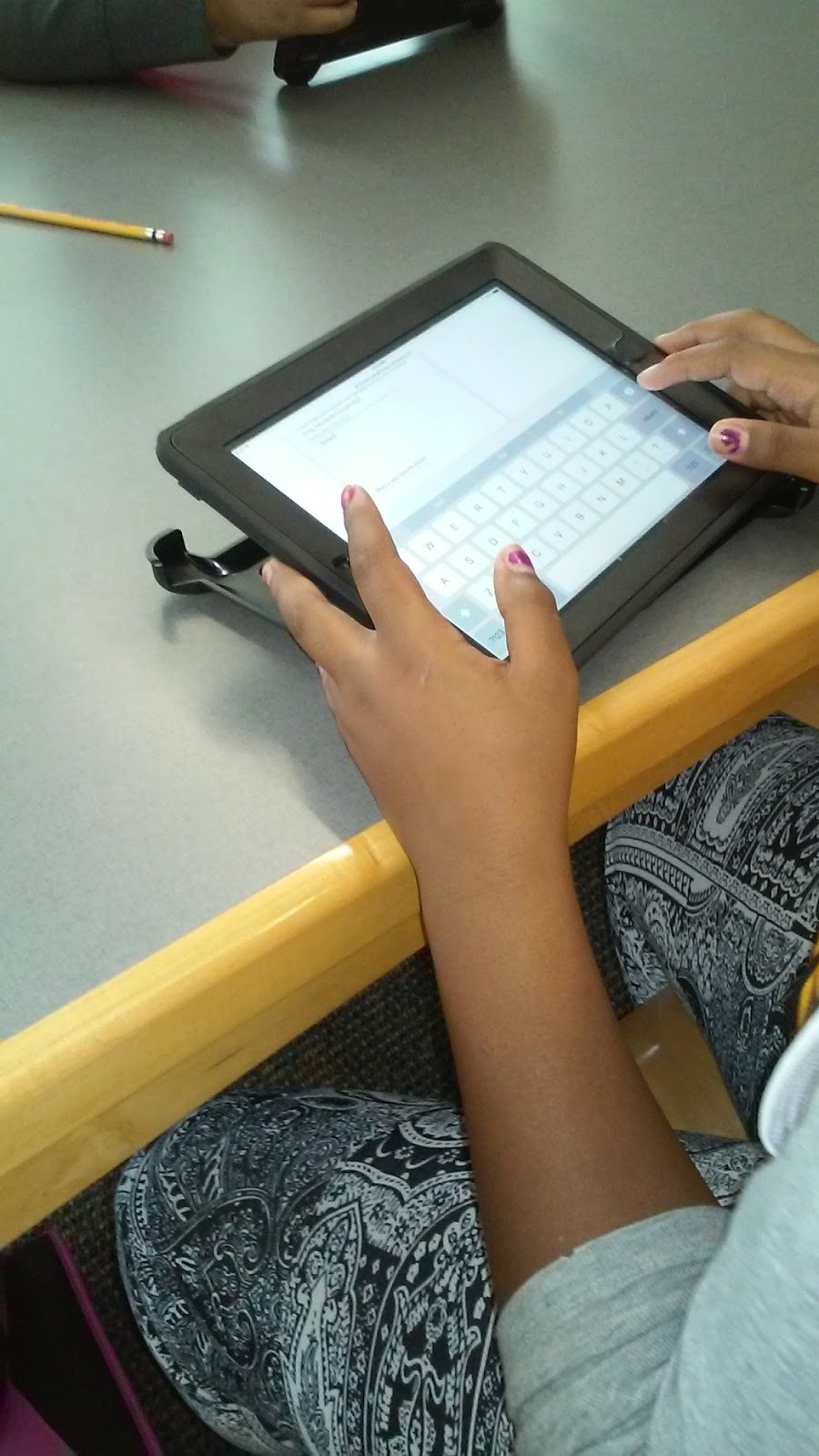
We agreed to start with having this class visit the library weekly instead of bi-weekly. This change will allow further positive interactions. In addition, these students generally have higher needs, so they will benefit from the attention of an extra adult for one day each week. We also decided to pull out some of our professional reading resources and think through some ways to focus on the needs of each student. We have both read The Book Whisperer by Donalyn Miller and decided that the best place to start was with a survey to get to know our students better. We used a lot of the questions from the book, but modified some and added some of our own. I was able to write the survey and my colleague put it into a Google Form so our students could fill in their answers using iPads. We now have data on each student that can inform our future steps.

 There were a few surprises about giving the survey. I thought that they students would jump at the chance to tell us about themselves. However, they just viewed the survey as more work and took some convincing to settle in and complete the questions. They complained about the length, which, again, I thought they might not notice due to using the iPads instead of paper/pencil. The other thing I noticed without looking too closely at the data is that these students spent a long time listing television shows (Q5). I wanted to have an idea of pop cultural interests so that I could find books with similar themes, but I had no idea just how much TV these students watch. It will be a challenge to draw them into books and away from television.
I will spend the next few days looking at the survey data and then developing the activity for this week. I would like to do a book pass, but with the intention of drawing books from the shelves that closely match the interests listed on the surveys. I'm looking forward to developing a relationship with this class and finding ways to draw them into books and reading as a part of their daily lives.