Thursday, May 26, 2016
Summer Reading: Public Library Programming
Summer reading really can't be separated from the public library. As schools are slowly finalizing the 2015-2016 school year, public libraries are getting geared up for their summer programming. Our local public library is trying something new this year. In addition to the traditional paper copy of a summer reading card that most kids are used to, KPL will also debut an online tracking system for summer reading and programming. The online system allows kids to sign up and then track their progress online. The tracking is divided into several categories: read (20 minutes/day), lead, explore, move, and create. The traditional "read" makes sense, but I love that there are other categories that encourage us to visit sites throughout town, take a role in getting others interested in the library, be active, and learn how to make new things.
Signing up to log reading and activities is simple. I have created a tutorial on the process. We will also be hosting public librarians who will explain the program and share the various participation options with all of our students, as well as assisting with sign up. I am excited to have a digital option that allows students who might not have transportation to the library and/or who are out of town during the summer the opportunity to participate. It will be interesting to track the data and compare it to previous efforts that we have instituted in conjunction with the public library.
In addition to having a great selection of books and movies, the public library hosts a variety of programs for all ages. The Link newsletter is delivered to homes and is also available online. It details many of the popular programs that are offered for each age group. You can log attendance at these formal programs, but there is also a chance to explore the branches and other locations around town to get secret codes that can be entered online as part of the digital game. How much fun is that?! I'm hoping to participate in many of these opportunities myself and look forward to seeing my students this way throughout the summer.
Tuesday, May 24, 2016
Summer Reading: Sync
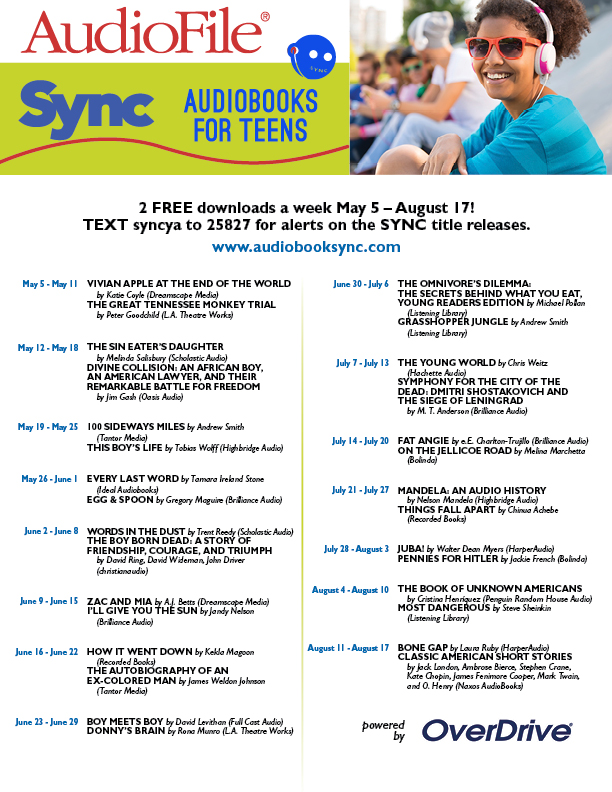
One of the exciting programs that has been available for a few years is the Sync Audiobooks for Teens. Sync offers two audiobooks per week from May 5-August 17, 2016. A new pair of audiobooks based on a weekly theme will be available each Thursday morning. A total of 30 titles are available for the summer, including lots of high interest options. Each title can be downloaded in MP3 format using the Overdrive app. The coolest part? Once a book is downloaded, it's yours to keep!
How can audiobooks be enjoyed throughout the summer?
- Listen while you walk or run
- Listen on a car ride
- Listen during a bike ride (on a safe trail--not in traffic!)
- Listen while mowing the lawn or gardening
- Listen while taking a bath
- Listen at bedtime
- Listen while doing chores
- Listen while cooking
Most people who have never tried audiobooks find them to be an enjoyable way to multitask.
The poster below lists the dates and books available each week. Give one a try and let me know how it goes!
Thursday, April 21, 2016
Collection Development in the Middle
School Library Journal has started a new newsletter called Be Tween. In the latest issue, Kiera Parrott wondered about the tricky nature of navigating collection development in middle school. She asked:
"Collection development and readers’ advisory for middle schoolers have got to be among the trickiest responsibilities. I’m curious about how librarians handle requests from younger readers for titles with mature YA content—what kinds of books do you (and don’t you) purchase for middle school readers? How are they shelved and organized? Have you had to deal with challenges from parents or administrators?"
It's interesting that she should be thinking about this because it is definitely something I ponder every day. I have students who ask me for YA and adult crossover books that I know our high schools and the public library teen section are sure to have, but that I have not purchased because they are solidly YA in terms of their reviews: both the interest level and the recommended age/grade level fall into the above eighth grade category.
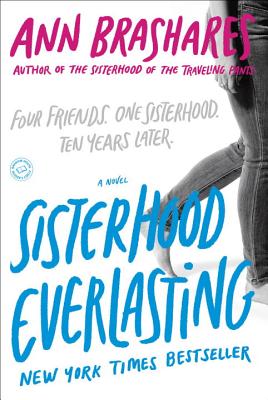
It's tricky to decide which books to buy, particularly when a series outgrows the middle school shelves in terms of its characters. Diehard fans of a series are going to want the next volume, but the themes may become more mature than we would normally choose for sixth through eighth grade. For example, when I started out as a school librarian, one of the most circulated series in my library was the Alice series by Phyllis Reynolds Naylor. It was a rite of passage for the girls to read these books. In Starting with Alice, Alice is young--third grade. This is a prequel to the main books in the series, but I purchased it for the middle school without question because the series was so popular. However, in 2013, the final book in the series, Now I'll Tell You Everything, was published. This book, along with several of the other later titles, is definitely YA. Alice is in college and the themes are mature--much beyond middle school. The same thing happened when Ann Brashares published Sisterhood Everlasting. Although the other books in the Sisterhood of the Traveling Pants series have enjoyed a place on our middle school shelves, I knew when I read this book that it was not going to work for the middle school. It is actually classified as an adult book, and although our high schools have copies of this and other adult crossover titles, it is not a book that I would select for the middle school.
On the other hand, there are YA titles that I know I will purchase for our middle schools. Examples of this have included the Hunger Games series by Suzanne Collins and is The 5th Wave series by Rick Yancey. Both of these series have been exceptionally popular at the middle school level, likely because of huge publicity campaigns and movie tie-ins. My students demand these titles and they will get them in any manner they can. Though they are mature in theme, they are written in such a way that appeals to middle school aged students. Another recent book that I had to consider is All American Boys by Jason Reynolds. The themes of this book are mature, but so current and relevant to my students that I am willing to push the envelope in terms of including a YA title because I know that reading this book will impact my students profoundly and get them thinking and talking about important topics. It's a book that will be passed student to student and drive lots of conversation about their own lives.
So what factors make the difference in my process? Why might I include one YA title, while advising the students that other titles are at our high schools or the public library waiting for them? My process considers the following:
"Collection development and readers’ advisory for middle schoolers have got to be among the trickiest responsibilities. I’m curious about how librarians handle requests from younger readers for titles with mature YA content—what kinds of books do you (and don’t you) purchase for middle school readers? How are they shelved and organized? Have you had to deal with challenges from parents or administrators?"
It's tricky to decide which books to buy, particularly when a series outgrows the middle school shelves in terms of its characters. Diehard fans of a series are going to want the next volume, but the themes may become more mature than we would normally choose for sixth through eighth grade. For example, when I started out as a school librarian, one of the most circulated series in my library was the Alice series by Phyllis Reynolds Naylor. It was a rite of passage for the girls to read these books. In Starting with Alice, Alice is young--third grade. This is a prequel to the main books in the series, but I purchased it for the middle school without question because the series was so popular. However, in 2013, the final book in the series, Now I'll Tell You Everything, was published. This book, along with several of the other later titles, is definitely YA. Alice is in college and the themes are mature--much beyond middle school. The same thing happened when Ann Brashares published Sisterhood Everlasting. Although the other books in the Sisterhood of the Traveling Pants series have enjoyed a place on our middle school shelves, I knew when I read this book that it was not going to work for the middle school. It is actually classified as an adult book, and although our high schools have copies of this and other adult crossover titles, it is not a book that I would select for the middle school.
On the other hand, there are YA titles that I know I will purchase for our middle schools. Examples of this have included the Hunger Games series by Suzanne Collins and is The 5th Wave series by Rick Yancey. Both of these series have been exceptionally popular at the middle school level, likely because of huge publicity campaigns and movie tie-ins. My students demand these titles and they will get them in any manner they can. Though they are mature in theme, they are written in such a way that appeals to middle school aged students. Another recent book that I had to consider is All American Boys by Jason Reynolds. The themes of this book are mature, but so current and relevant to my students that I am willing to push the envelope in terms of including a YA title because I know that reading this book will impact my students profoundly and get them thinking and talking about important topics. It's a book that will be passed student to student and drive lots of conversation about their own lives.
So what factors make the difference in my process? Why might I include one YA title, while advising the students that other titles are at our high schools or the public library waiting for them? My process considers the following:
- How does the book fit our written selection policy? We have a selection policy that guides our purchases for the district libraries, so I work to be sure any book I purchase falls within those guidelines when I read reviews. This is standard for most libraries and makes it somewhat easier (or at least you would think so!)
- Can I afford it? I have to narrow down my selection because my funds are not unlimited. If a book more naturally fits at the HS level, why not let them make the purchase and narrow my focus more closely to sixth through eighth graders?
- Do our high schools have the book? Although the HS and MS libraries sometimes crossover, I work to make my collection unique and independent of theirs so that my students find a whole new world of books when they move to the next level.
- Where does the public library shelve the book? This helps me look toward our community standards and provides confirmation that I am on the right track.
- Do I have time to read the book myself? I read. A lot. I try to read a variety of middle grade books so I can do effective reader's advisory. However, I also read most of the YA that I choose to include in the middle school (often by borrowing copies from our HS or public library) so that I can be sure I can defend my choices should that become necessary.
- Do I feel comfortable shelving the book where a child who is 10 or 11 and a child who is 13 or 14 can both have access? I do not separate my collection by age. All of the fiction is interfiled and all students are able to access all books. When I had a sixth through twelfth grade facility, I often considered the implications of separating the fiction books. Ultimately, I decided not to because of space considerations--I did not have the shelving or physical layout to house two collections. I also had to consider budget issues--I could not afford to purchase multiple copies and shelve them separately when books met the criteria for both collections.
- Is this a "must-have?" This is crucial, in my opinion. I need to engage all of my students. I can't have a collection that trends so young that my eighth graders get bored and stop bothering to come and explore, nor a collection that trends so old that my youngest students can't make connections. Kids want to know that I have what they are looking for--and they judge my competency on whether I have the new, relevant titles they seek.
- What are the issues that might be of concern? Often, I can anticipate why a book might be controversial. If I feel that I can perfectly explain why a book belongs in the middle school, I purchase it. If not, I pass.
- Does it fit our curriculum? This is more of a concern for nonfiction than fiction, but it does help with purchase justification in many cases. Books that fit a curricular standard may not be written at all levels, so I occasionally purchase a YA book that fills a need that cannot otherwise be met.
That is a lot to think about. Do I make errors? YES. I find myself occasionally moving books from the middle schools to the high schools. It happens. I purchased nearly 1,800 books this year, mostly through reading reviews. Books will slip through that end up not meeting the standards I mentioned above--it's going to happen. I also want my students and their parents to think deeply about books and consider why people might be afraid of words and ideas. Sometimes a person has not read a whole book and is upset by one passage. Anything taken out of context (books, movies, music) can offend. An open dialogue on these issues exists among librarians, but our wider community (students, parents, and even teachers) may not always be included in these conversations. I do the best I can and suspect I am not unique in my process. My goal it to be on top of the trends and have students get excited about the resources in the library. I am competing with popular culture and all the distractions that implies, so it's worth the time to consider every angle and try to get it right. I'm curious to know how others handle this same conundrum--please share your thoughts and ideas. How do you decide if a YA title hits the middle school shelves?
Monday, April 18, 2016
The Amazing Jason Reynolds
Just before spring break I received an email from the public library teen department. They had scheduled Jason Reynolds to visit and, due to state testing requirements, he was not going to be able to go to the high schools. I was asked if he could come talk to my students right after break. I wanted to say yes, but had to check with my principal and also find out if I could get staff members on board. Thank goodness, on both accounts, that the answer was YES. On that very day, 80 copies of All American Boys were delivered to the school and the eighth grade general English classes began reading it soon after.
I'm never certain as to how author visits will take shape--or how things will go on the actual day. My biggest worry this time was the week-long spring break looming ahead with our state M-STEP testing to follow. Would the students get engaged enough with the book to be ready for our guest? Would testing run over and make it hard for kids to come and meet the author? So many unknowns that any control freak would worry about were all coming together at once! However, after hosting many author visits over the past several years, I should know enough to trust my staff and our students--they always come through and this time was no different.
Mr. Reynolds arrived in the afternoon with the teen librarians from the public library. He was immediately comfortable--open and friendly in ways that make him magnetic. The kids were finishing lunch, so we had time to chat about his projects, as well as forthcoming books by other authors that he is excited about. I could have spent a whole day talking books with him. He also made a joke about my red hair (it's a superpower!) which made me instantly like him. I knew right away that the students were going to be on the edge of their seats--and I was not mistaken.
When the students arrived, they settled in and he began telling his side of where the idea for All American Boys came from. He also told Brendan Kiely's story. I won't spoil it because I genuinely hope everyone gets to see Jason speak, but I will say that the students were immediately engaged by his honesty and his storytelling ability. After talking about the book, he also spoke in general about the choices one makes and how they might impact future options. One of our staff members asked him about the moment when the "light went on," and he decided he needed to get his business in order as he had been a teen with little direction. He gave three heartbreaking instances that were pivotal for him . . . and you could hear a pin drop. It's hard for anyone to see into the future, particularly as a teen. I'm hoping that my students were able to take something from Mr. Reynolds' advice and that they will apply it to themselves. I see students every day who have limitless potential, but yet are backing themselves into corners where they will not have as many options as they might otherwise.
How impactful was this visit? We had to have Mr. Reynolds speak at the end of the day due to our testing schedule. Though the final bell had rung, I had students who stuck around to keep asking questions and chatting. As if that was not enough, even more students arrived at the evening presentation to hear him speak again. The boys were especially taken with everything he shared--and wanted to ask even more questions. I know that there is a lot of talk out there about transforming boys into readers. I have always thought that good collection development and reader's advisory both make a difference. However, this visit convinced me that making connections can also be powerful. I like the idea of authors becoming heroes and role models . . . but also for my students to discover their own strengths chart a path for themselves. I am grateful for every opportunity to expose students to new books, new ideas, new people . . . we are fortunate to have a relationship between the schools and the public library that offers our students so much more than I can do on my own.
I'm never certain as to how author visits will take shape--or how things will go on the actual day. My biggest worry this time was the week-long spring break looming ahead with our state M-STEP testing to follow. Would the students get engaged enough with the book to be ready for our guest? Would testing run over and make it hard for kids to come and meet the author? So many unknowns that any control freak would worry about were all coming together at once! However, after hosting many author visits over the past several years, I should know enough to trust my staff and our students--they always come through and this time was no different.
| KPL and KPS librarians with Jason Reynolds. We are fortunate to have a partnership between the public and school libraries. |
When the students arrived, they settled in and he began telling his side of where the idea for All American Boys came from. He also told Brendan Kiely's story. I won't spoil it because I genuinely hope everyone gets to see Jason speak, but I will say that the students were immediately engaged by his honesty and his storytelling ability. After talking about the book, he also spoke in general about the choices one makes and how they might impact future options. One of our staff members asked him about the moment when the "light went on," and he decided he needed to get his business in order as he had been a teen with little direction. He gave three heartbreaking instances that were pivotal for him . . . and you could hear a pin drop. It's hard for anyone to see into the future, particularly as a teen. I'm hoping that my students were able to take something from Mr. Reynolds' advice and that they will apply it to themselves. I see students every day who have limitless potential, but yet are backing themselves into corners where they will not have as many options as they might otherwise.
How impactful was this visit? We had to have Mr. Reynolds speak at the end of the day due to our testing schedule. Though the final bell had rung, I had students who stuck around to keep asking questions and chatting. As if that was not enough, even more students arrived at the evening presentation to hear him speak again. The boys were especially taken with everything he shared--and wanted to ask even more questions. I know that there is a lot of talk out there about transforming boys into readers. I have always thought that good collection development and reader's advisory both make a difference. However, this visit convinced me that making connections can also be powerful. I like the idea of authors becoming heroes and role models . . . but also for my students to discover their own strengths chart a path for themselves. I am grateful for every opportunity to expose students to new books, new ideas, new people . . . we are fortunate to have a relationship between the schools and the public library that offers our students so much more than I can do on my own.
| These boys had follow-up questions for Mr. Reynolds. Two of them also attended the evening presentation to learn more. |
| Our staff members also took time out to join the presentation and ask questions after Mr. Reynolds was done. |
Friday, March 11, 2016
Chromebooks and the Learning Curve
![]() |
| We started the hour with the Chromebooks on the tables to save time. |
Our first experiment was paired with our need to have the kids think about how much time they were spending reading outside of school. I had shared this infographic with my colleague and we agreed that it was worth having our students look at it, discuss it, and write about it. This would allow them to reflect on their reading time, as well as get familiar with using the Chromebooks to write a response.
Friday, February 26, 2016
New Books and Celebrating Black History Month
Though we strive to have books that reflect all of our students available throughout the year, it's nice to highlight books that are appropriate to Black History during February. Some new books have arrived recently that are perfect for this purpose. All four middle schools have copies of each of these titles and several are perfect for reading and sharing aloud--including pictures and photos that work well under a document camera.
Written in poetic format, this picture book (and winner of multiple awards) tells the story of Civil Rights advocate Fannie Lou Hamer. Starting with her childhood and leading into her political career, this book is a captivating story of an important figure.
Weatherford, Carole Boston and Ekua Holmes Voice of Freedom: Fannie Lou Hamer
At a recent SLJ Summit, Adam Lerner of Lerner Publishing stood up to talk about the importance of a new book he was publishing. The Book Itch, written from a child's viewpoint, tells the story of the National Memorial African Bookstore in New York City owned by Lewis Henri Michaux. The illustrated story tells of famous African Americans who visited the store and Mr. Michaux's passion for words. A bibliography of the author's research is included for further reading on this topic.
Nelson, Vaunda Micheaux and R. Gregory Christine The Book Itch: Freedom, Truth & Harlem's Greatest Bookstore
The life and poems of Paul Laurence Dunbar are highlighted in this unique biography which also includes black and white illustrations. Students may be familiar with certain famous African Americans (Civil Rights activists come to mind), but I like the idea of helping them become familiar with poets, inventors, singers, athletes, actors, and entrepreneurs as well. By displaying books that highlight people who have contributed to the arts, students will have the opportunity to see a variety of ways in which they might use their talents and strengths in the future.
Derby, Sally and Sean Qualls Jump Back, Paul: The Life and Poems of Paul Laurence Dunbar
Through stunning black and white photography, the history of Motown is told including the people and places that made Motown sound famous. As a resident of Michigan, I have long been interested in the rise and fall of Detroit. This book includes information about the rich cultural heritage of the city. An extensive timeline and bibliography are included for those with further research interest.
Davis, Andrea Pinkney Rhythm Ride: A Road Trip Through the Motown Sound
Wednesday, January 27, 2016
Genre Kahoot
When our students used the iPads during their testing session, I promised that we would play Kahoot together on their next library visit. The list of great things about Kahoot keeps expanding each time I get the opportunity to use it and/or see it in action. For this visit, I found a game that included genres since this is something we are working on as a part of our goal to have the students find books of choice independently. I was able to easily and quickly modify the game to suit our students' needs (and I think I would fine tune it even more in the future--and probably eventually write my own version--having had the chance to see how students reacted to the questions).
Once the students received the iPads and logged into Kahoot, the game progressed quickly. I liked how it was interactive and all of the students were engaged during the entire game. Even when a student got a question wrong, he/she knew that the next question was a chance to be redeemed. At the end of the game, I was able to download the results to my Google Drive so I could see which questions each student missed and assess the overall knowledge of the group. Many teachers here use Kahoot as a review game, but I can also see using it as a formative assessment and/or an exit ticket. Our students enjoyed the activity and I plan to continue using the iPads for Kahoot on a regular basis. I also have a teacher piloting Plickers in order to engage his students. What other technology tools have you used to increase student engagement and achievement?
![]() |
| A question as it appears on the screen |
![]() |
| The answer screen as it appears following the question |
![]() |
| My laptop screen at the beginning of the game |
![]() |
| The answer grid on the students' screens |
![]() |
| The iPad screen once a student has selected an answer choice |
![]() |
| The leaderboard--the kids loved this part as they seemed to enjoy the competitive nature of the game |
Subscribe to:
Posts (Atom)